Operations
Usage-Based Cleaning
Also called: demand-based cleaning, traffic-based cleaning
Usage-based cleaning means cleaning a space after a set number of visitors, or when feedback says it needs attention, instead of only on a fixed schedule. It is also called demand-based cleaning.
How it works
- A people counter counts visitors to each space, such as a restroom.
- A threshold is set per space - for example, service after 150 visitors.
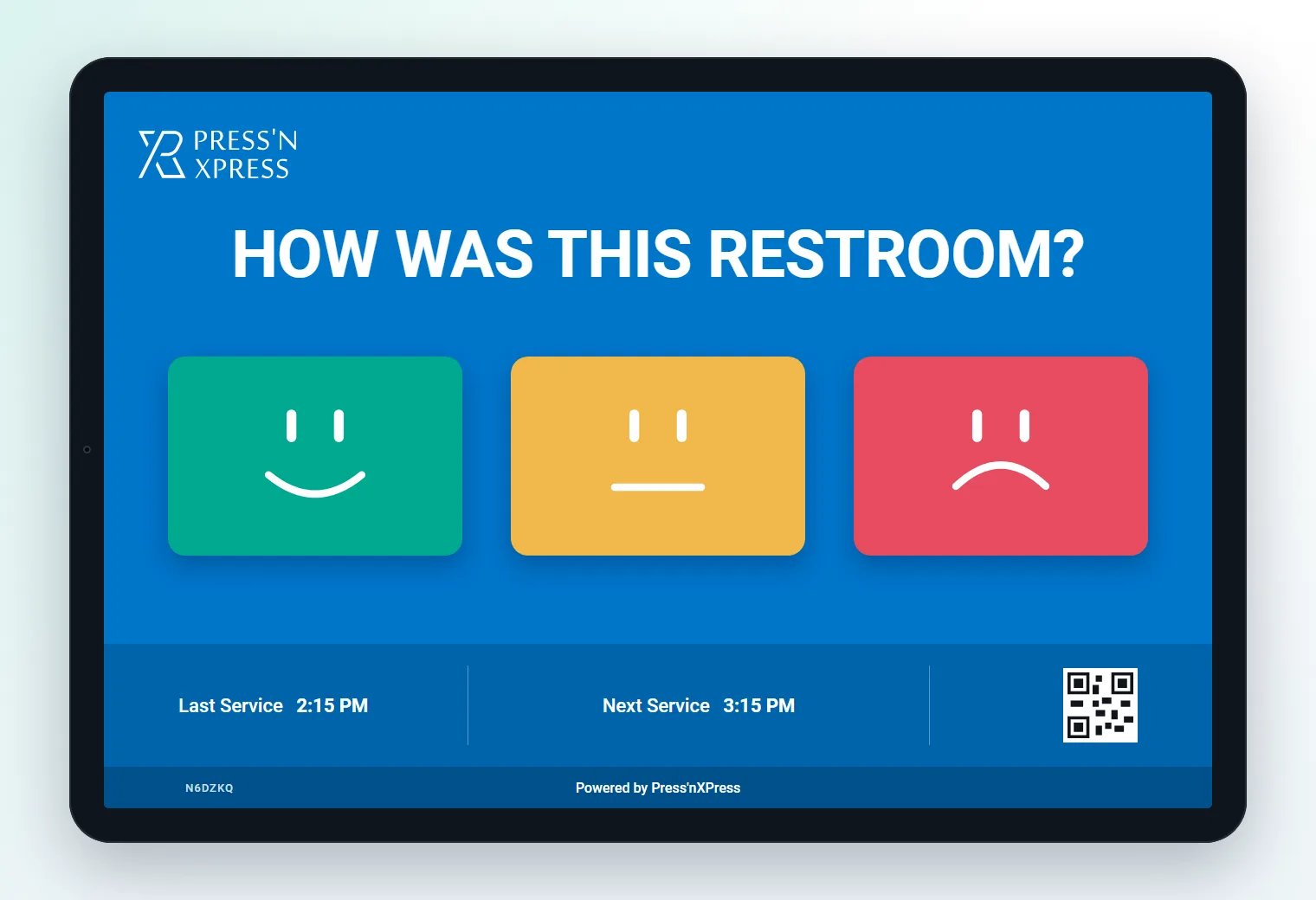
- When the count passes the threshold, or feedback hits an alert threshold, a work order goes to the assigned cleaner.
- The cleaner verifies the visit on site, which resets the count.
Why it works better than a fixed schedule
- Busy spaces get attention before they fail, not hours later.
- Quiet spaces stop absorbing rounds they don't need.
- Labor moves to where it matters, often without adding hours.
How to measure it
- Complaints per 1,000 visitors, before and after.
- Time from alert to verified clean.
- Share of visits that were triggered by traffic or feedback vs the schedule.
Usage-based cleaning with Press'nXPress
Press'nXPress combines the People Counter, restroom feedback and Action Hub work orders with verified check-ins. See smart restroom management and the guide to usage-based cleaning with people counters.
Frequently Asked Questions
What is the difference between usage-based and scheduled cleaning?
Scheduled cleaning visits every space at fixed times, whether it was busy or not. Usage-based cleaning sends staff when a space has had a set number of visitors or when feedback says it needs attention, so busy areas get more care and quiet ones less.
How do you set a usage threshold?
Start from your baseline: count visitors for two to four weeks, look at when complaints start to rise, and set the threshold a little below that number for each space. Adjust it as you learn.
Does usage-based cleaning replace the schedule completely?
Usually not. Most teams keep a minimum schedule for compliance and add usage- and feedback-triggered visits on top, so no space is skipped and busy ones get extra rounds.
Put it into practice
See how Press'nXPress collects feedback where experiences happen and turns it into action at every location.
Book a DemoBrowse the glossary