Collectors
Feedback Kiosk
Also called: survey kiosk, customer feedback kiosk, visitor feedback kiosk
A feedback kiosk is a physical device placed where an experience happens that lets people rate it in seconds - customers at an exit, patients in a ward, visitors in a lobby, employees in a break room. It is also called a customer feedback kiosk or visitor feedback kiosk.
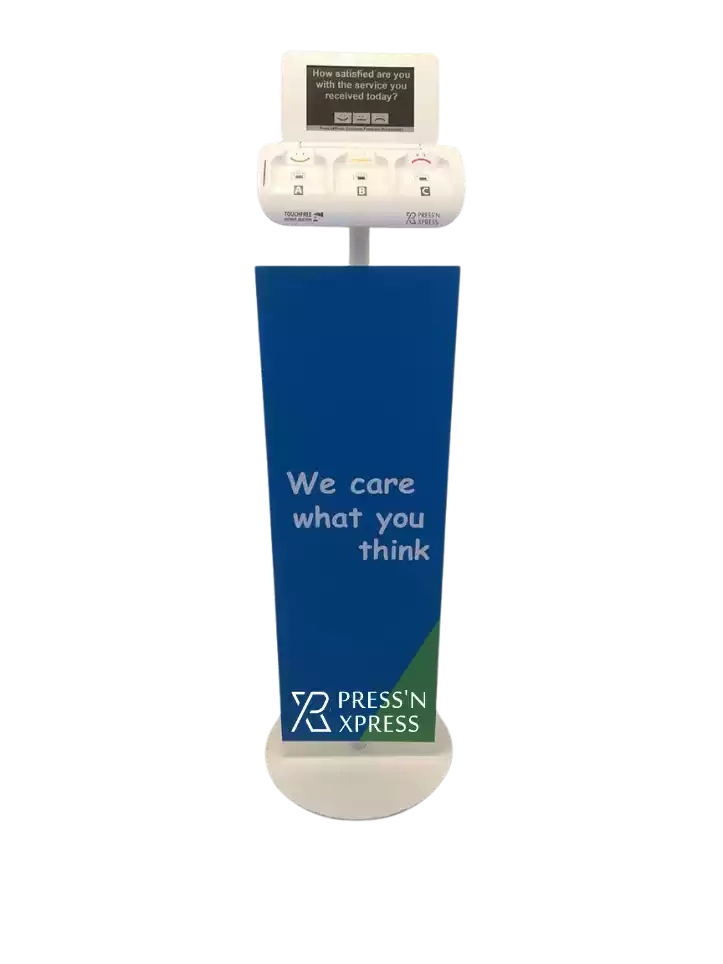 Floor stand
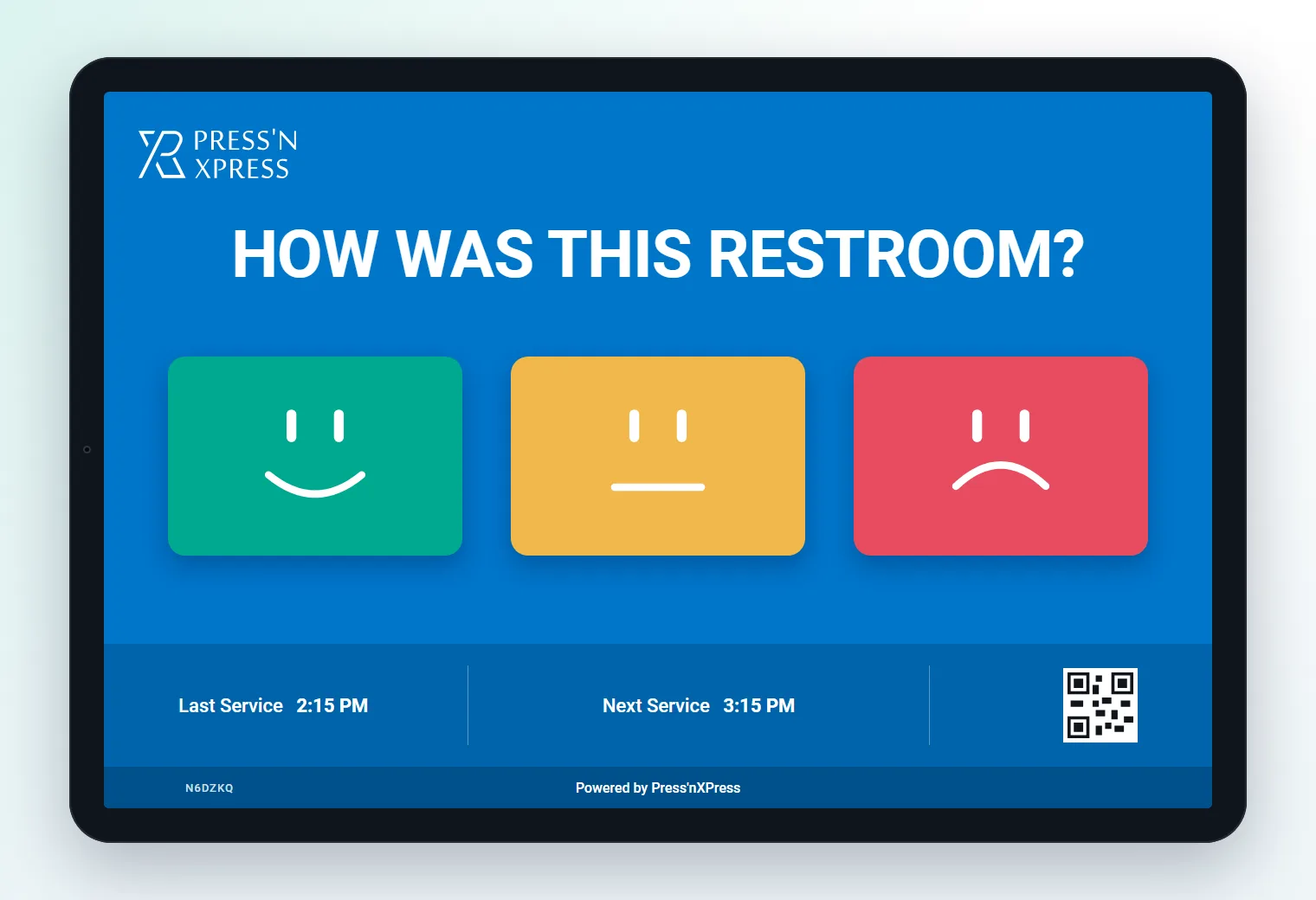 Survey tablet
 Smiley terminal
Types of feedback kiosk
| Type | How people answer | Best for |
|---|---|---|
| Smiley terminal | One press or hover on a face | Busy exits, washrooms, counters |
| Survey tablet | A few taps on a touchscreen | Front desks, wards, branded entrances |
| Large touchscreen kiosk | A longer on-screen survey | Lobbies with time to spare |
Each comes in floor-stand, counter and wall-mount formats.
Where feedback kiosks work best
- Retail - store exits and checkouts.
- Hospitality - lobbies, restaurants and spas.
- Healthcare - waiting rooms, wards and discharge.
- Transportation - security lanes, gates and washrooms.
- Facilities - washrooms, cafeterias and common areas.
- Workplaces - break rooms and site entrances, for employee feedback.
How to choose a feedback kiosk
- Match the format to the space - visibility, footprint and power.
- Decide how much you need to ask: one rating, or a few questions.
- Check for alerts, remote management and a dashboard by location.
Feedback kiosks from Press'nXPress
See the feedback kiosk formats, the feedback terminal and the tablet app.
Frequently Asked Questions
What are the types of feedback kiosk?
Smiley terminals with three faces, touchscreen tablets running a survey app, and full-size touchscreen kiosks. Each comes in floor-stand, counter and wall-mount formats.
Where are feedback kiosks used?
Anywhere an in-person experience happens: stores, restaurants, hotels, hospitals and clinics, airports and stations, offices, campuses, washrooms and staff break rooms.
Is a feedback kiosk better than a QR code?
A kiosk gets far more responses because people don't need to take out a phone. A QR code costs less and suits places where a kiosk won't fit. Many sites use both.
Put it into practice
See how Press'nXPress collects feedback where experiences happen and turns it into action at every location.
Book a DemoBrowse the glossary