Analytics
Text Analytics
Text analytics uses natural language processing (NLP) to turn large volumes of written comments into themes, sentiment and trends that can be counted and compared.
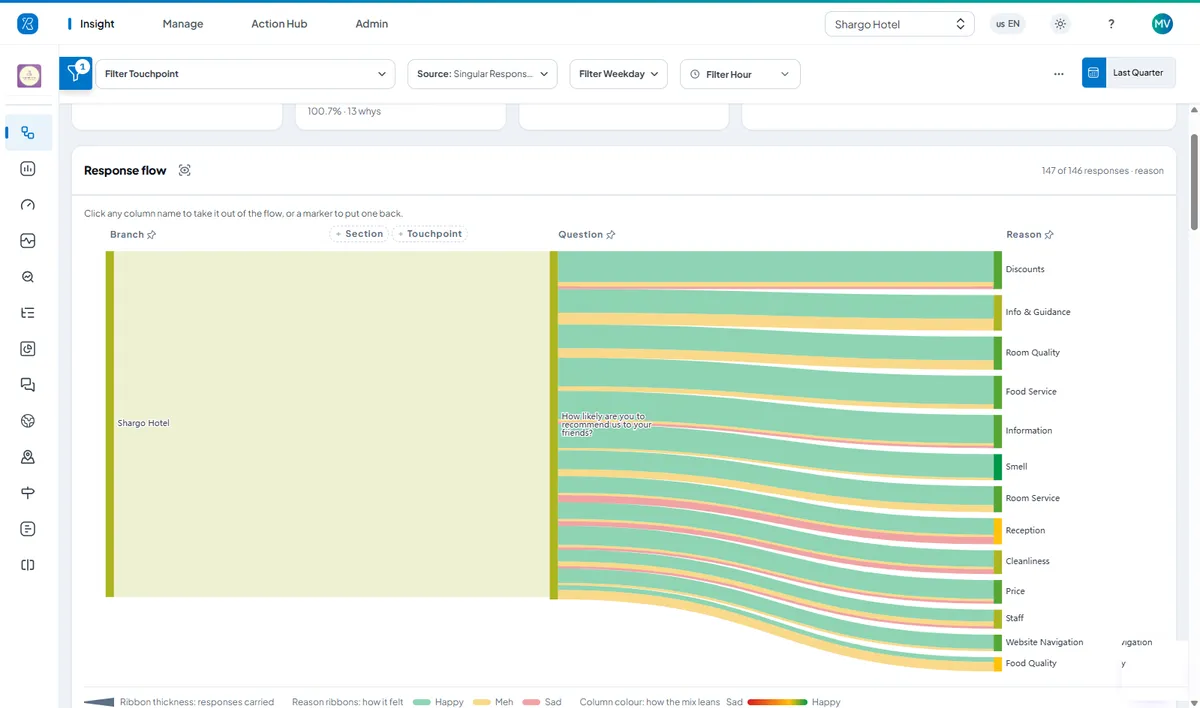
What text analytics finds
- Themes - what people talk about: wait time, staff, cleanliness, price.
- Sentiment - whether they talk about it positively or negatively.
- Trends - which themes are rising or falling, and where.
- Coverage - how often a theme appears across all comments.
What it shows that ratings can't
A score says how customers feel. Comments say why. Text analytics makes the why measurable, so a team can see that complaints at one site are about wait time on weekends, not about staff.
Common ways to show the results
- Theme rankings and word clouds.
- Sentiment over time.
- Themes by location, touchpoint or agent.
- AI summaries that answer "what changed this week?" - see generative AI.
Text analytics with Press'nXPress
Press'nXPress Text Analytics clusters comments into themes, scores sentiment and filters by branch and touchpoint, and PXP AI summarizes what changed and answers questions about the data in plain language.
Frequently Asked Questions
What does text analytics do with customer comments?
It groups comments into themes such as wait time or cleanliness, scores their sentiment, spots topics that are rising, and lets you filter by location or touchpoint - so thousands of comments can be read in minutes.
What is the difference between text analytics and sentiment analysis?
Sentiment analysis is one part of text analytics. Text analytics also finds the themes and topics people talk about; sentiment analysis says whether they talk about them positively or negatively.
How many comments do you need for text analytics?
It becomes useful as soon as comments arrive regularly, but patterns are clearer with a few hundred comments per period. Set a minimum before trusting a theme's trend at a small location.
Put it into practice
See how Press'nXPress collects feedback where experiences happen and turns it into action at every location.
Book a DemoBrowse the glossary