Analytics
Sentiment Analysis
Sentiment analysis automatically judges whether a comment is positive, negative or neutral, and how strongly, so thousands of comments can be read at a glance.
How it works on feedback
- Each comment is read by a language model.
- It is scored positive, negative or neutral, often with a strength - the sentiment score.
- Better models score each topic separately: "great food, slow service" is positive for food and negative for service.
- Scores are averaged by location, touchpoint, theme and period.
What to use it for
- Find what drives unhappiness - the themes with the most negative sentiment.
- Check whether a fix worked - did people start talking about the issue differently?
- Prioritize replies - surface the most negative comments first.
Limits to keep in mind
Sarcasm, mixed opinions and one-word comments are harder to score. Pair sentiment with the rating the person gave, and read a sample of comments behind any big change.
Sentiment analysis with Press'nXPress
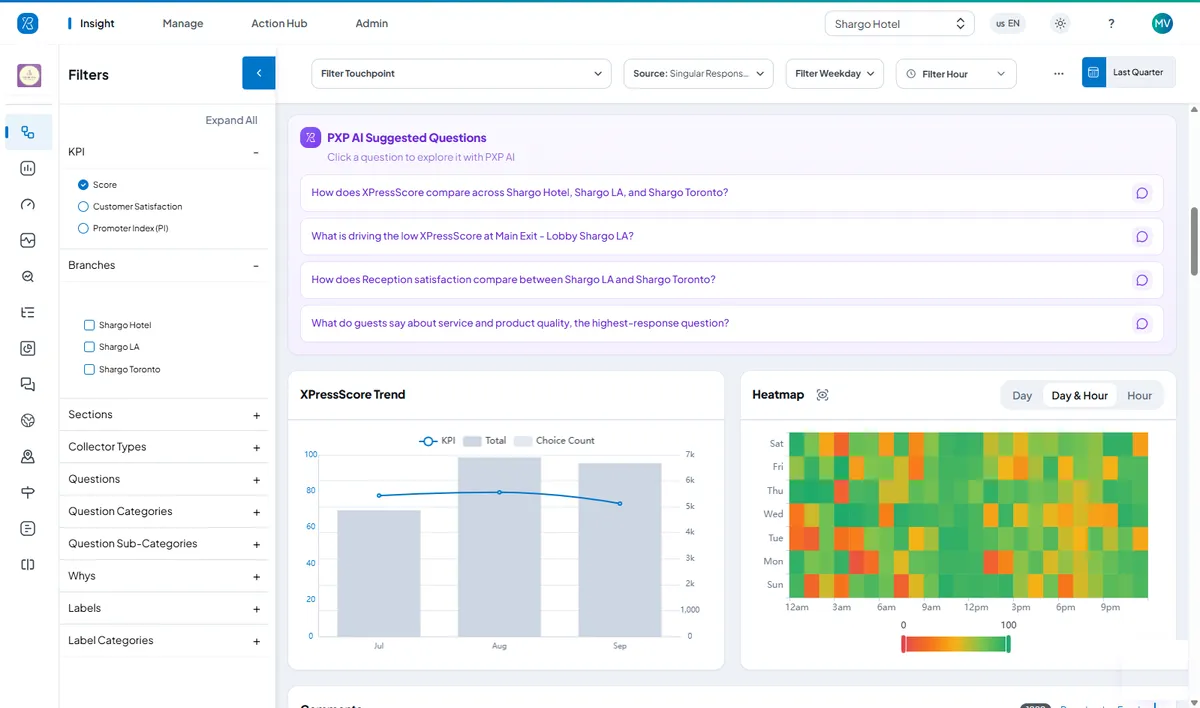
Press'nXPress scores the sentiment of every comment alongside its rating and theme, shown in Text Analytics and summarized by PXP AI in the dashboard. See also text analytics.
Frequently Asked Questions
How does sentiment analysis work?
A language model reads each comment and scores it as positive, negative or neutral, often with a strength. Better models score each topic in a comment separately, so "great food, slow service" counts as positive for food and negative for service.
How accurate is sentiment analysis?
Modern models handle most everyday comments well, but sarcasm, mixed opinions and very short comments are harder. Reading a sample of comments behind any big change is good practice.
What is sentiment analysis used for in customer experience?
Spotting which topics drive unhappy feedback, tracking whether a fix improved how people talk about an issue, and prioritizing comments that need a reply.
Put it into practice
See how Press'nXPress collects feedback where experiences happen and turns it into action at every location.
Book a DemoBrowse the glossary