Metrics
Customer Satisfaction Score (CSAT)
Also called: CSAT, customer satisfaction
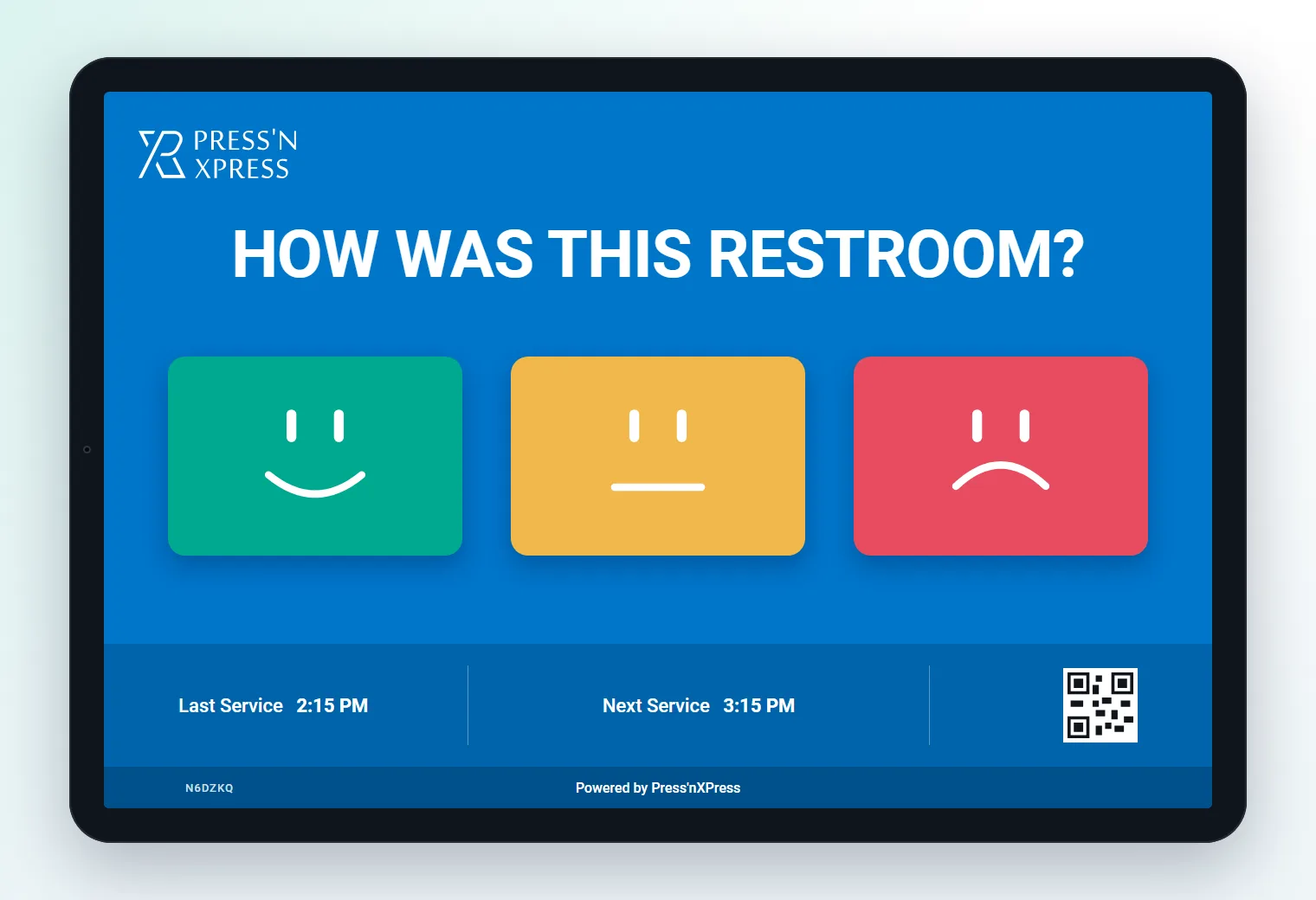
Customer Satisfaction Score (CSAT) is the share of customers who say they were satisfied with a specific interaction, such as a store visit, a meal, a support call or a washroom. It is asked right after the experience with a simple question like "How satisfied were you today?".
How CSAT is calculated
CSAT = satisfied responses ÷ total responses × 100
On a 5-point scale, "satisfied" usually means the top two answers (4 and 5). On a three-face smiley scale it is the share of happy faces. Some platforms show the same ratio on a 0-10 scale, so 7.3 means 73% of answers were satisfied.
Where CSAT works best
- Right after a specific moment - checkout, check-in, a meal, a cleaning round or a support call.
- At many locations at once - comparing CSAT by site, touchpoint, hour and day shows exactly where service slips.
- With a follow-up question - asking why after a low score turns a number into something a team can fix.
How to improve CSAT
- Ask in the moment. Feedback collected at the exit or counter is more accurate and gets far more responses than a survey sent days later.
- Collect the reason. Short issue tags such as wait time, cleanliness or staff explain each low score.
- Alert the right person. Low scores should reach the manager or team who can act while the customer is still there.
- Compare locations fairly. Read CSAT next to response volume and foot traffic, not on its own.
CSAT with Press'nXPress
Press'nXPress collects CSAT on touchless smiley terminals, tablets, QR codes, SMS, WhatsApp, email and the web, shows it by location in live dashboards, and turns low scores into alerts and work orders through Action Hub.
Frequently Asked Questions
How do you calculate CSAT?
Divide the number of satisfied responses (for example the top two answers on a 5-point scale, or happy faces on a 3-face scale) by the total number of responses, and multiply by 100. 80 satisfied out of 100 responses is a CSAT of 80%.
What is a good CSAT score?
It depends on the industry and the scale used, so the most useful benchmark is your own trend and the spread between your locations. A score that holds steady while response volume grows is a better sign than a high score from a handful of answers.
What is the difference between CSAT and NPS?
CSAT measures satisfaction with a specific interaction right after it happens. NPS measures overall loyalty by asking how likely someone is to recommend the business. CSAT tells you what to fix today; NPS tracks the relationship over time.
Put it into practice
See how Press'nXPress collects feedback where experiences happen and turns it into action at every location.
Book a DemoBrowse the glossary